

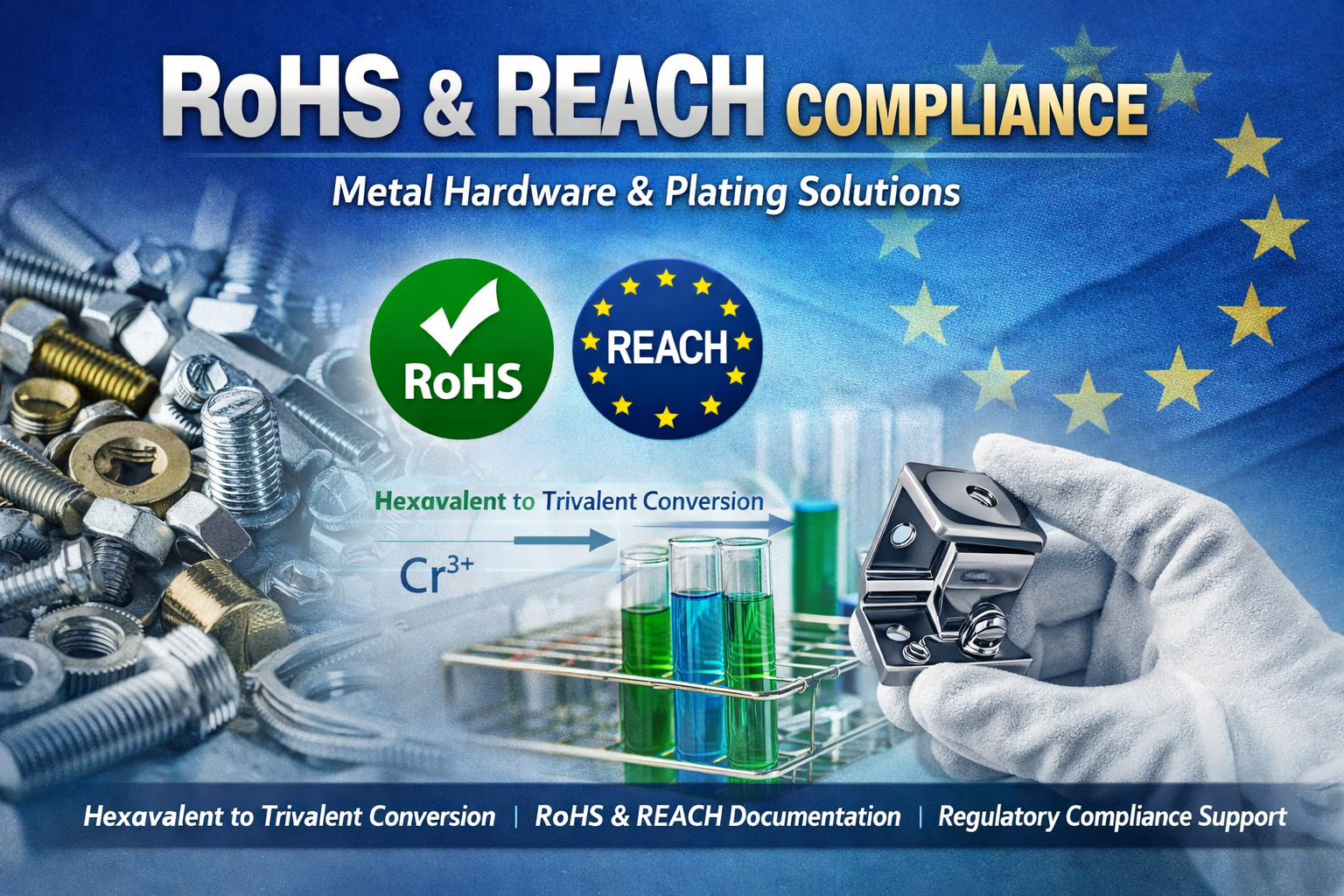
Reliable RoHS & REACH Compliance for Metal Hardware
Compliance with RoHS and REACH is critical for metal hardware manufacturers supplying to Europe. Regulations on hazardous substances, including heavy metals in plating, directly impact product approval, import eligibility, and brand credibility.
Our structured compliance system ensures that your metal hardware products meet these requirements, protecting market access and maintaining customer trust.
Plating Compliance: Transition from Hexavalent to Trivalent Chromium
Hexavalent chromium (Cr⁶⁺) plating is a major compliance risk under RoHS. We have successfully supported customers in transitioning from hexavalent to trivalent chromium (Cr³⁺) plating, ensuring compliance while maintaining product performance.
Our approach includes:
-
Plating process evaluation and material substitution
-
Corrosion resistance and durability validation
-
Surface finish consistency control
-
Coordination with certified plating suppliers
This end-to-end support ensures metal hardware products meet regulatory requirements without compromising quality.
Integrated Compliance Management
Compliance is embedded throughout our manufacturing process. Key controls include:
-
Raw material verification
-
Supplier qualification and monitoring
-
Material declaration and traceability
-
In-process quality control and final validation
This approach ensures consistent RoHS and REACH compliance for all products.
Item-Based Compliance Documentation
We provide comprehensive, item-based compliance documentation, including:
-
RoHS declarations
-
REACH SVHC statements
-
Material information
-
Supporting test reports (upon request)
This allows customers to quickly verify compliance and meet EU market requirements.
Your Trusted Compliance Partner
We help customers reduce regulatory risk, improve supply chain transparency, and accelerate product approval and market entry. With proven experience in plating compliance and documentation support, we provide practical, reliable solutions for long-term B2B partnerships.
To help customers better understand regulatory requirements, we’ve answered some common questions below.
FAQ
Q1. What is RoHS compliance?
A: RoHS compliance refers to meeting EU restrictions on hazardous substances such as lead, mercury, cadmium, and hexavalent chromium in electrical and mechanical components. For metal hardware manufacturers, RoHS compliance ensures that materials and surface treatments meet EU market requirements and can be safely sold within regulated regions.
Q2. What is REACH SVHC and why does it matter?
A: SVHC (Substances of Very High Concern) are chemicals identified under REACH as potentially harmful to human health or the environment. Products containing SVHC above threshold limits must be declared. REACH SVHC compliance is essential for product acceptance, avoiding regulatory risk, and maintaining supply chain transparency.
Q3. Can metal hardware meet RoHS and REACH requirements?
A: Yes. Metal hardware can meet RoHS and REACH requirements when material selection, plating processes, and supplier controls are properly managed. Heavy metal control, compliant surface treatments, and verified material sourcing are key. A structured compliance system ensures consistent results.
Q4. What is the difference between hexavalent and trivalent chromium plating?
A: Hexavalent chromium (Cr⁶⁺) plating is restricted under RoHS due to its hazardous properties, while trivalent chromium (Cr³⁺) is a safer, compliant alternative. Transitioning to trivalent chromium plating helps manufacturers meet EU regulations while maintaining corrosion resistance and surface finish when properly validated.
Q5. Do you provide RoHS and REACH compliance documents?
A: Yes. We provide item-based RoHS and REACH compliance documentation, including declarations, SVHC statements, and supporting test reports upon request. This allows customers to quickly verify compliance and meet EU market requirements.
Q6. Can you support compliance verification for custom products?
A: Yes. We support compliance verification during the development stage of custom metal hardware products. This includes material evaluation, plating compliance review, and documentation preparation to ensure the final product meets RoHS and REACH requirements before mass production.
Contact us to request compliance documents or discuss your project requirements.